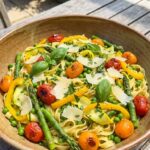
Description
Ever wondered how to turn a handful of fresh veggies and pasta into a colorful, restaurant-worthy dish in under 30 minutes? Say hello to Pasta Primavera, a vibrant, veggie-packed meal that’s as delicious as it is easy to make! This classic Italian-American dish is all about celebrating fresh ingredients with a creamy, flavorful sauce that’s light yet satisfying.
Ingredients
Sauce
-
Chicken Broth (1 ¼ cups): Adds depth and savory flavor to the sauce without being too heavy.
-
Half and Half (1 ¼ cups): Creates a creamy texture while keeping the sauce light. It’s a mix of milk and cream for balance.
-
Chicken Bouillon Cube (½ cube): Boosts the savory, umami flavor of the sauce.
-
Soy Sauce (1 teaspoon): Adds a subtle salty, umami kick to enhance the overall taste.
-
Hot Sauce (1 teaspoon): Brings a gentle heat to wake up the flavors without being spicy.
-
Dried Herbs (¾ teaspoon each: parsley, basil, oregano, mustard powder): These herbs give the sauce an Italian flair and earthy warmth.
-
Red Pepper Flakes (1 pinch): Adds a tiny bit of heat for complexity.
Vegetables and Pasta
-
Olive Oil (2 tablespoons): Used to sauté the veggies, adding a rich, smooth flavor.
-
Broccoli Florets (2 cups, bite-sized): Adds crunch and vibrant green color, plus it’s packed with vitamins.
-
Carrots (½ cup, julienned): Brings sweetness and a pop of orange.
-
Red Onion (½ cup, sliced): Adds a mild, sweet flavor when cooked.
-
Red Bell Pepper (1 cup, sliced): Contributes sweetness and bright color.
-
Zucchini (½, cut into chunks, about 1 ½ cups): Adds a soft texture and mild flavor.
-
Frozen Peas (½ cup): Brings a burst of sweetness and green goodness.
-
Cherry Tomatoes (1 cup, halved or quartered): Adds juicy freshness and a touch of tang.
-
Butter (3 tablespoons): Creates a rich base for the sauce.
-
Garlic (3 cloves, minced): Infuses the dish with aromatic, savory flavor.
-
Flour (3 tablespoons): Thickens the sauce for a creamy consistency.
-
Parmesan Cheese (1 cup, freshly grated): Adds nutty, cheesy goodness that ties everything together.
-
Ziti (½ lb.): A sturdy pasta that holds up well to the sauce and veggies. You can use other short pastas like penne or rigatoni.
-
Lemon Juice (2 tablespoons): Brightens the dish with a fresh, tangy finish.
-
Salt and Pepper: Enhances all the flavors.
Substitutions and Variations
-
Vegetables: Swap in asparagus, mushrooms, or green beans for variety. Use what’s in season or in your fridge!
-
Pasta: Try penne, farfalle, or fusilli. Gluten-free pasta works great, too.
-
Cheese: Pecorino Romano or grated Asiago can replace Parmesan for a different cheesy flavor.
-
Cream: Use heavy cream for a richer sauce or whole milk for a lighter one. For dairy-free, try coconut milk and vegan Parmesan.
-
Protein: Add cooked chicken, shrimp, or tofu for extra heartiness.
-
Broth: Use vegetable broth for a vegetarian version.
Instructions
-
Prep the Sauce Base:
-
In a large measuring cup with a spout, combine the chicken broth, half and half, chicken bouillon cube, soy sauce, hot sauce, dried parsley, basil, oregano, mustard powder, and red pepper flakes. Stir well and set aside.
-
Tip: Prepping the sauce ingredients first saves time during cooking.
-
-
Boil Water for Pasta:
-
Bring a large pot of water to a boil. Once boiling, add ½ tablespoon of salt to flavor the pasta.
-
Tip: Don’t cook the pasta yet—wait until step 6 so it’s ready at the right time.
-
-
Sauté the Vegetables:
-
Heat 2 tablespoons of olive oil in a large skillet over medium-high heat.
-
Add broccoli, red onion, carrots, and red bell pepper. Cook for 3 minutes, stirring occasionally, until they soften slightly but stay crisp.
-
Add zucchini, peas, and cherry tomatoes. Season with salt and pepper to taste. Cook for 2–3 more minutes, then remove the veggies to a plate and set aside.
-
Tip: Don’t overcook the veggies—they should be tender-crisp to keep their vibrant colors and textures.
-
-
Make the Sauce:
-
In the same skillet, melt 3 tablespoons of butter over medium heat. Add minced garlic and cook for 1 minute until fragrant.
-
Sprinkle in 3 tablespoons of flour and stir continuously for 2 minutes to form a roux (a thick paste).
-
Slowly pour in the sauce mixture from step 1, stirring constantly to avoid lumps. Bring to a boil, then reduce to a simmer. Let it cook for 3–4 minutes, stirring occasionally, until slightly thickened.
-
Tip: Add the sauce in small splashes to keep the mixture smooth.
-
-
Cook the Pasta:
-
While the sauce simmers, add ½ lb. of ziti to the boiling water. Cook according to package instructions until al dente (usually 8–10 minutes). Drain and set aside.
-
Tip: Al dente pasta holds up better in the sauce, so don’t overcook it.
-
-
Combine the Sauce and Cheese:
-
Reduce the sauce to low heat. Gradually sprinkle in 1 cup of freshly grated Parmesan cheese, stirring until melted and smooth.
-
Stir in 2 tablespoons of lemon juice for a bright, fresh flavor.
-
Tip: Freshly grated Parmesan melts better than pre-shredded, which can be grainy.
-
-
Assemble the Dish:
-
Add the drained pasta to the sauce and stir to coat evenly.
-
Return the sautéed vegetables to the skillet. Toss everything together gently to combine and heat through for 1–2 minutes.
-
Tip: If the sauce gets too thick, add a splash of chicken broth or pasta water to loosen it.
-
-
Serve:
-
Remove from heat and serve immediately. Garnish with freshly cracked pepper and lemon slices for extra flair.
-
Tip: A sprinkle of extra Parmesan on top never hurts!
-
